Scraping Browser Services Versus Self-Hosted Headless Instances
Managed services outpace self-hosting when anti-bot defenses demand constant updates.
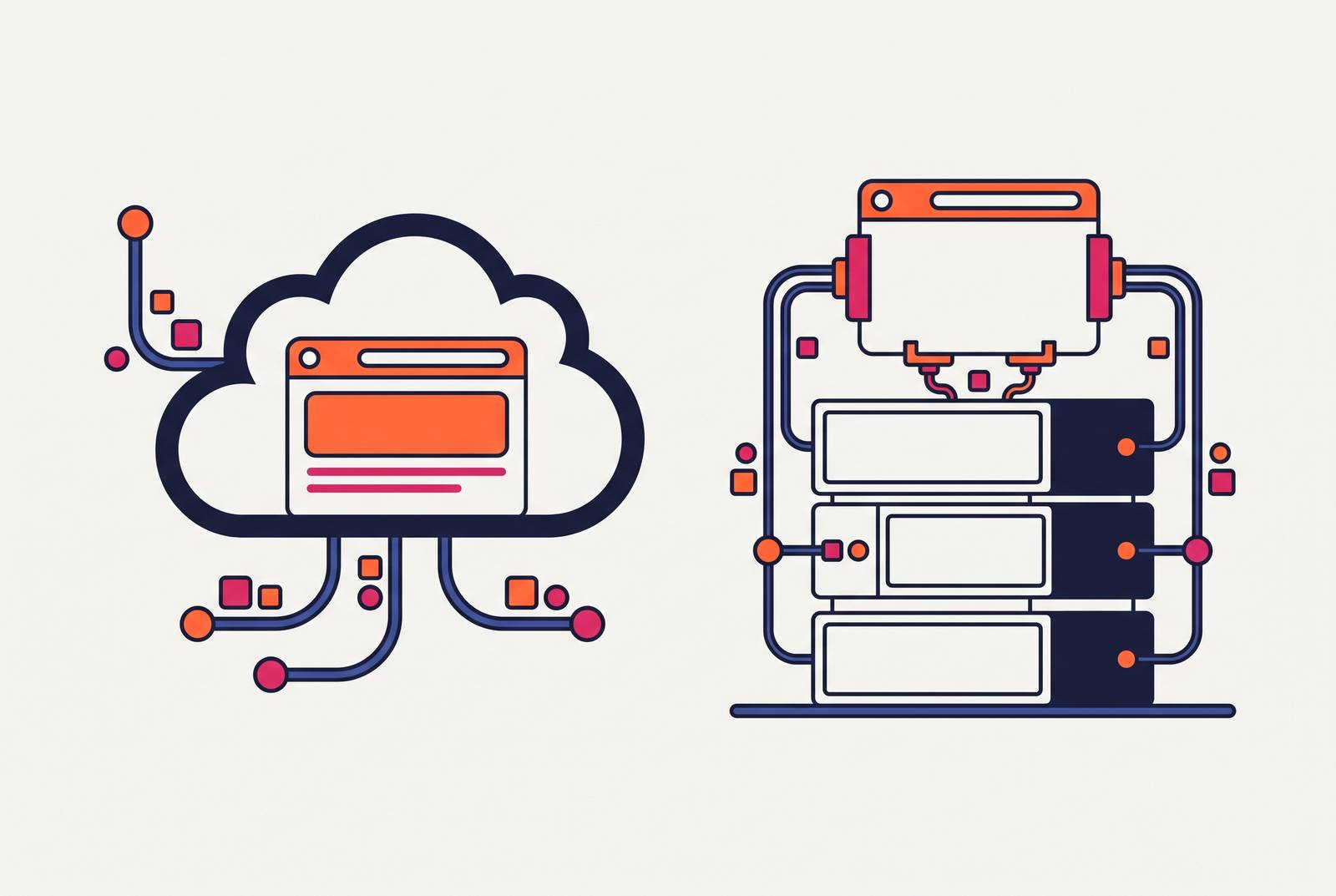
The choice between a self-hosted headless browser and a managed scraping browser service used to come down to money versus convenience. That framing is dead. Anti-bot systems now catch naive scrapers within seconds on protected domains, and AI agents have turned browser automation into runtime infrastructure that has to stay up, not a background script somebody checks on once a week. Mordor Intelligence puts the web scraping market at $1.03 billion, headed toward $2.00 billion by 2030, while the WAF and anti-bot market is already $11 billion. Those two markets are growing directly against each other, and whoever picks the wrong side of this decision inherits the cost of that collision.
The stakes are higher, too, because of who's doing the scraping now. Cloudflare Radar found that 75% of AI traffic existed to feed training pipelines. The buyer of a reliable extraction setup is increasingly a machine acting on its own, not an analyst pulling data into a spreadsheet once a day. What follows works through the three things that actually decide this question: who owns the infrastructure, how the setup holds up against anti-bot defenses built specifically to stop it, and what it costs once volume moves past a hobby project. Self-hosting is the right call far less often than teams assume, and the reasons why sit inside each of those three questions.
What "self-hosted headless" means and what it doesn't include
Playwright and Puppeteer get lumped in as "the self-hosted option," but calling them infrastructure gives them too much credit. They're scripting layers. They hand you an API to drive a browser and nothing else: no anti-detection, no proxy rotation, no way to keep five accounts from bleeding into each other's fingerprint. Anyone who starts from raw Playwright is signing up to build all of that themselves, from scratch, before writing a single line of actual scraping logic.
Self-hosting means owning the whole stack around the framework. Pinning browser binary versions. Spawning instances, health-checking them, killing the ones that crash or zombie out mid-crawl. Managing concurrency and queuing. Rotating proxies. Hardening fingerprints, usually through stealth plugins or a custom Chromium build maintained by hand. None of that ships with Playwright or Puppeteer out of the box, and skipping any one piece is how a scraper gets flagged on request three instead of request three thousand.
Scrapy still handles large-scale link-following and HTML extraction better than anything else in open source. Playwright and Puppeteer step in for pages that lean on client-side rendering, work Scrapy can't do alone, but coordinating a crawl across thousands of URLs still needs Scrapy or a custom scheduler sitting on top of the browser layer. Selenium Grid is the other self-hosted option on the table, mostly for teams that already run browser grids for QA and are repurposing that hardware for scraping instead of buying something new.
A middle category sits between raw automation and full managed services: infrastructure you still host yourself but that arrives with more built in. Browserless ships as an open-source Docker image (plus a commercial license), exposing Chrome over WebSocket CDP and Firefox and WebKit over the Playwright protocol, all inside your own VPC. Steel is an open-source browser API built for AI agents specifically, with session management and authentication persistence baked in, compatible with Puppeteer and Playwright, and it also offers a hosted cloud version for teams that decide self-hosting isn't worth the trouble after all. Camoufox rounds out the self-hosted anti-detection engines.
Self-hosting Browserless or Steel is not the same exercise as self-hosting raw Playwright, and treating them as interchangeable is the first mistake most teams make. The former hands you session management and baseline stealth on day one. The latter hands you a blank canvas and a to-do list with no bottom. That list isn't optional, either: most of the modern web won't render at all for a scraper that can't execute JavaScript, and traditional HTTP scraping, the kind built on requests and BeautifulSoup, fails against an estimated 68% of target sites today because the content simply isn't sitting in the initial HTML response.
The anti-bot environment self-hosted scrapers face
Cloudflare's bot-management products protect a substantial share of the public web. Akamai Bot Manager covers a meaningful chunk of the top 10,000 sites. DataDome claims to catch and block over 99% of unauthorized automated traffic on the properties it protects. That's the default wall standing between a scraper and its target across most of the commercial internet, and it doesn't stay still.
Cloudflare started blocking AI-based scraping by default in July 2025, and pipelines that had run fine for months broke overnight with zero code changes on the scraper's end. That's the actual shape of this fight: the target moves first, and the scraper either moves with it or goes dark.
Detection runs across four layers at once, and a session has to clear all four to pass. The TLS handshake has to match a genuine browser stack. HTTP/2 behavior has to line up with whatever browser the client claims to be running. The rendering engine underneath must be that browser, or the detection system flags the mismatch and blocks the session. And the pacing of clicks, scrolls, and page transitions has to move like a person.
DataDome collects more than 35 signals per session, mouse movement, scroll velocity, typing cadence, click coordinates, and runs several trillion of them a day. Since 2025 it's layered on intent-based detection too, judging the trajectory of a whole session rather than scoring individual signals in isolation. Scrapfly reports DataDome runs more than 85,000 customer-specific machine learning models. Each protected site is functionally its own puzzle, not one generic wall every scraper hits in the same place.
Default headless Puppeteer leaks at least 14 detectable signals on the very first request, out of the box, before a single stealth measure gets applied. Puppeteer-Stealth, the plugin built specifically to patch those leaks, still gets caught by current Cloudflare Turnstile, DataDome, or PerimeterX within minutes on a hardened site. And because vendors retrain on a rolling basis, a setup that clears detection today can fail next month with no code changes at all: the defense shifted, not the scraper. That's a maintenance line that never closes, sitting on top of the plainer cost of running headless Chrome at scale in the first place, heavy CPU and memory draw, plus the constant job of catching zombie processes before they quietly stall a whole queue.
How managed scraping browser services close the anti-bot gap
Managed services take those four detection layers and make them somebody else's problem to keep current. Fingerprint randomization, genuine TLS stacks, human-paced interaction, proxy rotation, CAPTCHA solving: all of it gets updated continuously by the vendor's team, not patched in by whoever's on call that week. The strongest providers build custom browser engines from scratch instead of stealth-patching an off-the-shelf one, chasing fingerprints coherent enough to survive scrutiny from each major detection vendor's model, not just the obvious ones.
Six services define the field right now, and they solve different problems, not the same one with different pricing. Browserbase runs cloud-only, serverless, Chrome-only, built specifically for AI agents: Basic and Advanced Stealth Modes on a custom Chromium, automatic CAPTCHA solving, session recording through a Live View and Session Inspector, and native hooks into agent frameworks like CrewAI, Browser Use, and Stagehand. Pricing starts free (1,000 credits, one concurrent browser), runs through Developer at $20 a month and Startup at $99, with custom Scale pricing above that. There's no self-hosting path here.
Browserless splits the difference: a cloud product and a self-hosted, open-source Docker image under commercial license, covering Chrome, Firefox, and WebKit rather than Chrome alone. Its BrowserQL product handles CAPTCHA solving across 21 types, DataDome, Lemin, MTCaptcha, reCAPTCHA, Cloudflare Turnstile, hCaptcha, GeeTest, Akamai, and Amazon WAF among them. It generates unique WebGL fingerprints and lets customers bring their own proxies without a per-GB markup, priced in usage-based units with a 1,000-unit free tier. That's built for high-volume scraping, where cost predictability keeps per-request budgeting accurate at scale, even though the agent SDK isn't as polished.
Bright Data's Scraping Browser leans hardest into proxy scale: fingerprint randomization across canvas, WebGL, fonts, and screen resolution, built-in CAPTCHA solving for reCAPTCHA and hCaptcha, and IP rotation across residential IPs in 195 countries, the largest such pool in the industry. An independent benchmark of 11 providers put its average success rate at 98.44%, though the conditions behind that number deserve a second look before anyone assumes it holds on their specific target.
Apify takes a different angle, pairing scraping infrastructure with a marketplace of more than 437 pre-built scrapers covering Amazon, LinkedIn, TikTok, Zillow, and over 100 other domains, aimed at teams that want a working scraper today rather than infrastructure to build one on top of. Zyte, formerly Scrapinghub, is the mature option in the group. Proxy selection and anti-ban measures apply automatically per target site, a single API hides browser versions and scaling from the caller, and it has the deepest Scrapy integration on this list, which makes it the default pick for Python-centric teams. Steel closes out the list as the open-source-by-design answer to Browserless: session management, authentication persistence, and anti-detection built in, Playwright and Puppeteer compatible, with a hosted cloud tier for teams that want the convenience without giving up the ability to read the source.
A cloud browser API built on its own rendering and bot-mitigation stack rounds out Scrapfly's 2026 ranking of cloud browser APIs. It supports Playwright and Puppeteer over CDP, ships SDKs across several languages, and prices on credits tied to active browser time and bandwidth.
The AI-native and agentic dimension that changes what "managed" must deliver
A year ago, headless browsers were mostly a scraping tool and a QA testing tool. Now they're core infrastructure for AI agents that book things, fill out forms, chain multi-step research tasks together, and pull live data straight into an LLM's context window. That shift changes what "managed" is required to mean, and most self-hosted setups simply weren't built for it.
Agentic workflows operate across multiple steps and depend on authentication state that survives between actions instead of resetting each time. They need a human-in-the-loop hook for the login walls and CAPTCHAs that automated solving still can't clear alone. And they need output an LLM can actually use directly: clean Markdown or structured JSON, not raw HTML soup somebody has to parse afterward.
Firecrawl was built around exactly that constraint. Its APIs turn a public URL into clean, structured output an LLM can consume directly, and it reports 96% web coverage, positioning it as the data layer under AI SDR tools, enrichment steps, and signal-based outbound plays. Other open-source tools have taken the same stance, treating LLM-ready output as the actual goal rather than something bolted onto raw HTML parsing.
Some vendors built entirely new products for this. Oxylabs launched an AI Studio; Bright Data built out its Scraper Studio for similar use cases. Browserless added MCP server support. Browserbase built direct integrations with CrewAI, Browser Use, and Stagehand. On agentic integration specifically, managed services are simply ahead of anything self-hosted right now, and that gap isn't closing on its own.
The revenue operations use case makes this concrete. An AI agent identifies an in-market account, enriches the contact record, drafts an outreach message, and launches a sequence, compressing what used to be a multi-step manual process into one automated chain. None of that survives a CAPTCHA wall halfway through if the browser infrastructure underneath stalls. Platforms that reduce the number of handoffs in that chain can cut how much of it depends on outside scraping infrastructure at all.
Total cost of ownership across the three scales that matter
Managed platforms often get credited with a 40 to 60% reduction in total cost of ownership against self-hosting. That number is real as an average, but it's an average across wildly different use cases, and it doesn't hold the same way at every volume; most TCO comparisons quietly mislead at that point.
At low volume, early-stage territory, self-hosting on a small VPS runs $10 and up a month, while commercial managed grids like BrowserStack or Gridlastic start around $30. The infrastructure gap barely registers. What actually decides it here is developer time: setup and upkeep on a self-hosted stack eat far more hours than that $20 difference justifies, so managed wins on hours saved, not on the invoice.
Mid volume is where the 40 to 60% advantage holds hardest. The hidden cost at this stage is engineering time spent on fingerprint upkeep, proxy management, and watching for crashed browser instances, hours that pile up fast once a pipeline runs continuously instead of on demand. Browserless's managed tier and Bright Data's Scraping Browser are both priced for exactly this range.
High volume changes which option is cheaper. A well-optimized self-hosted setup can end up cheaper over the long run, but only if the team running it already has the expertise to keep it healthy without hiring for it. The break-even point comes down to two questions: is there already an ops person on staff, so the marginal cost of running the scraper is near zero, and is the volume predictable enough to amortize fixed infrastructure instead of paying for burst capacity that sits idle most of the time.
Latency barely matters for scraping but matters more for CI and testing. Cloud browsers add 50 to 200 milliseconds of network latency against running locally, which is nothing next to page loads that already take one to five seconds. In a test suite where those milliseconds compound across thousands of runs, though, the same gap slows overall execution time in a way teams actually notice.
The cost most TCO comparisons skip entirely is the tax that comes from anti-bot vendors retraining their models on a schedule nobody outside the vendor controls. A self-hosted team either keeps dedicated engineering capacity on hand to respond to detection drift, or it accepts that pipelines will break on their own timeline and stay broken until someone gets around to it. Browserbase reports that managed solutions cut deployment time by 85% against self-hosted setup. Treat that figure as vendor-optimistic if you want, but the direction it points, that self-hosting carries real upfront and recurring engineering cost, holds up across every source here.
When self-hosting is the correct answer despite the overhead
Data residency changes the calculation completely, and it's the one condition that overrides everything else in this piece. When regulatory or contractual terms require processing inside a specific account or region, self-hosted Browserless, Steel, or a custom Playwright fleet becomes the only real option, because managed cloud services process data on the vendor's own infrastructure regardless of which region gets selected in a dashboard.
Fixed, predictable volume with an ops person already on staff is the other genuinely clean case. When load is known and stable, and someone's job already includes keeping infrastructure healthy, self-hosting is the cheaper path, full stop, and the maintenance burden is a known quantity instead of a recurring surprise bill.
Deep customization is the third reason, and it's real but narrower than teams assume. Browser interaction logic too specific for a managed API to expose needs direct access to the underlying CDP surface, and Playwright or Puppeteer give that level of control in a way an abstracted API can't match, by design.
Browser engine diversity matters too, if it's an actual requirement rather than a nice-to-have. Browserless covers Chrome, Firefox, and WebKit; Browserbase is Chrome-only. Cross-engine testing needs either a self-hosted stack or Browserless specifically, no other combination on this list gets there.
For security-sensitive workflows, open-source auditability is worth something no managed SaaS product can offer at any price. Steel's open-source design means the code doing the automation can be read and verified line by line, which matters to teams that can't take a vendor's word for what happens inside a black box, and shouldn't have to.
Most production teams that get serious about this end up somewhere in between: self-hosting the pieces where residency or customization demands it, buying managed infrastructure for everything else. That split is a deliberate architectural choice. It's an acknowledgment that infrastructure ownership, anti-bot resilience, and cost at scale rarely point in the same direction at once, and pretending otherwise is how teams end up rebuilding this decision twice.